

 By
By When I first learned about Plastic-Free July around 2018, I thought I had a good grasp of the issue. I had been involved in campaigns, facilitated workshops, and worked closely with organizations like Himalayan Climate Initiative—supporting initiatives such as, No Thanks I carry my own Bag campaign, No Straw on My Drink and the Dopper Changemakers Challenge. I believed I had seen the full scope of the plastic crisis: overflowing landfills, clogged waterways, marine pollution, and the growing threat of microplastics.
But this year, something changed.
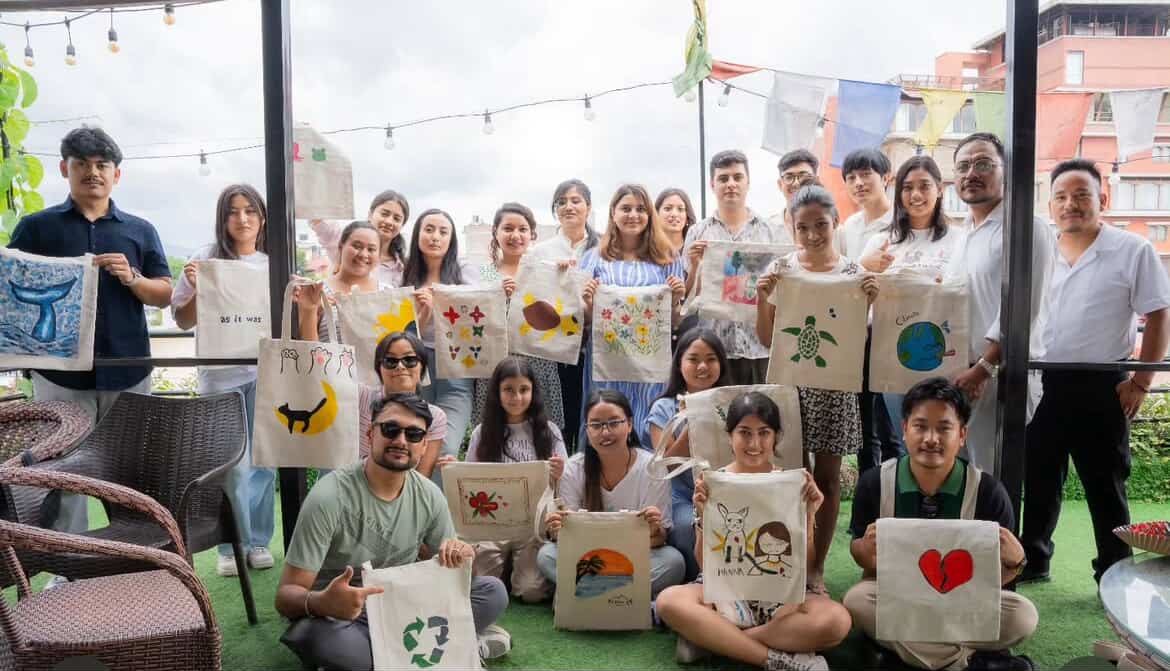
At a recent “Sip & Paint: Plastic-Free July” event—designed by Kalpaavatika Society Nepal to spark dialogue through art and storytelling—I sat across from a young girl, Innocence in her face. With wide eyes, she quietly said, “When I think of plastic, I remember microplastics.” answering a simple check-in question. The room fell silent, followed by a collective “ohhhhhhh”. Her simple yet piercing observation cut deeper than any graph or panel discussion ever had.
The Science Behind the Child’s Worry
Plastic is everywhere. Since mass production began in the 1950s, we have manufactured more than 9.2 billion tons of plastic globally. Shockingly, over 75% of it has become waste, with at least 8 million tons entering the oceans every year (Reference (1. 2.)) These plastics don’t biodegrade; instead, they break down into microplastics—particles smaller than 5mm—which have now infiltrated every part of our ecosystem.
For countries like Nepal, the crisis hits differently. As a landlocked developing country, Nepal faces poor waste collection systems, minimal recycling infrastructure, and heavy reliance on plastic imports. Much of our plastic waste ends up being burned openly, releasing black carbon—a short-lived climate pollutant that accelerates glacial melting in the Himalayas. Plastic pollution here isn’t just about trash—it’s about public health, climate vulnerability, and long-term sustainability.
A recent study found that some birds are now building their nests with plastics instead of natural materials. This shows how much the production and spread of plastic has grown in just a few generations. It’s not just humans anymore—wildlife is being forced to adapt to our pollution.
A Transboundary Threat
What makes plastic pollution so dangerous is its transboundary nature. Plastic thrown into a river in one country can end up in the ocean and be consumed by marine life in another. Microplastics have no borders. They are carried through air currents, rivers, and trade routes, making this a shared global problem—especially harmful for developing nations like Nepal that bear the environmental burden without being major contributors to plastic production.
In the Himalayan region, for example, black carbon released from burning plastic contributes to glacial melt, threatening the water security of millions downstream. Across Asia, countries with poor waste management are facing increasing climate and health impacts due to plastic leakage.
Plastic in Our Bodies, Food, and Ecosystems
Studies show we are now consuming microplastics in our food, water, and even air. Microplastic particles have been found in placentas, human blood, and lungs. Fish, birds, and animals ingest plastic, mistaking it for food—often leading to internal injuries, starvation, and death.
But nature is resilient, and science is catching up.
HOPE: Enhanced Biodegradability & Diverse Environments: Beyond the daily hustle and the overwhelming challenge of plastic pollution, a profound new hope is emerging from the frontiers of research and innovation in bioplastics. This isn’t just about incremental improvements; it’s about fundamentally rethinking materials to create truly degradable solutions that can return to nature or regenerate resources. Scientists are constantly discovering novel feedstocks, from agricultural waste to marine algae, and developing advanced processes that not only reduce environmental impact but also enhance the performance of these next-generation materials.
From Awareness to Action
Plastic-Free July shouldn’t be limited to individual gestures. It should be a catalyst for systemic solutions, community innovation, and cross-generational dialogue. Through platforms like Nepal Climate Hub, we are bringing young changemakers, educators, and green entrepreneurs together to build climate-resilient actions rooted in local context and global awareness.
Because when birds are building nests out of garbage, and when plastic in the environment exceeds wartime levels, it’s no longer a distant problem.
It’s here, in our homes, our bodies, and our skies.
-Written by Monica Neupane
Follow Monica Neupane: https://moniconeupane.wixsite.com/monico
Read More From Monica Neupane:
How Koshi River Floods are Drowning Dreams in Sisauli Tappu | Monica Neupane
Read more at Offline Thinker
Follow Offline Thinker on Facebook, Twitter, and Instagram. You can send us your writings at connect.offlinethinker@gmail.com
